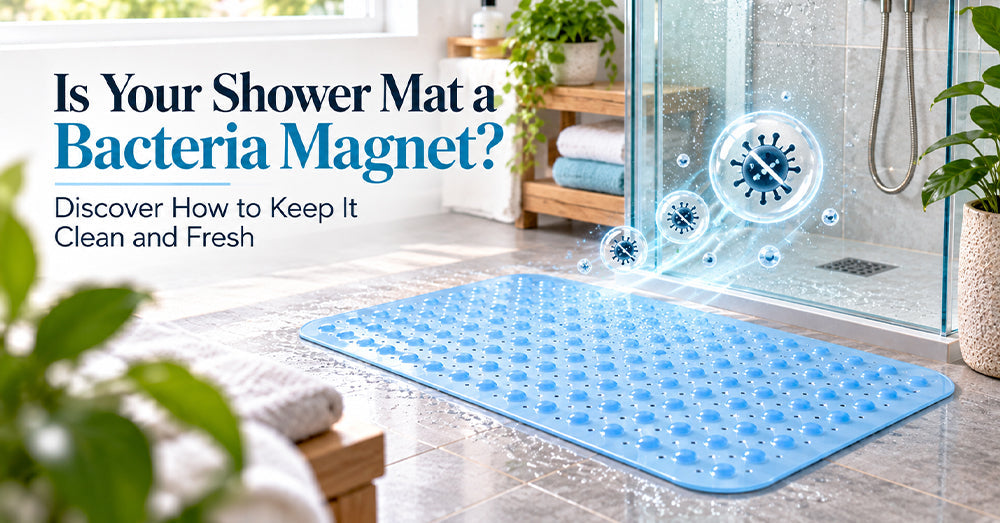

Your bathroom may look spotless, but have you checked what is happening beneath your feet after a shower? That soft, absorbent mat you step onto every morning can collect moisture, dead skin cells, soap residue, and everyday dirt. When it stays damp for hours, it creates conditions that encourage bacteria and mould to grow. The good news? You don't need an elaborate cleaning routine or expensive bathroom products to keep things fresh. A few smart habits, the right cleaning method, and a bathroom-suited mat can make a noticeable difference. Whether you're refreshing your bathroom or shopping for a new mat, here's how to keep it cleaner, prevent unpleasant odours, and choose a material that fits your lifestyle.
Why Does Your Shower Mat Get Dirty So Quickly?
A bathmat serves a practical purpose: it absorbs water, provides a comfortable surface, and helps reduce slippery floors. However, the same absorbency that makes fabric mats useful can also make them harder to keep dry. Three common factors contribute to the problem.

1. Constant moisture
After a shower, a mat can remain damp long after the bathroom floor appears dry. Poor ventilation, high humidity, and a mat left flat against the floor can slow evaporation. Damp bathroom textiles can support microbial growth, especially if you don't wash them regularly.
2. Everyday dirt and residue
Clean feet still carry natural oils, shed skin cells, and other organic material. Add soap splashes, shampoo residue, and dust, and your mat gradually becomes a grime collection point. Over time, this buildup can affect its appearance, absorbency, and smell.
3. An overlooked underside
The top of a mat gets most of the attention, but the underside deserves just as much care. Water can get trapped between a rubber backing and the floor, especially if you don't lift the mat after use. If the underside develops a musty smell, feels slimy, or shows visible mould, cleaning the surface alone won't solve the underlying moisture problem.
How to Keep Your Shower Mat Clean and Fresh
You don't have to disinfect your bathroom every day. In most households, regular cleaning with an appropriate detergent is enough to remove most dirt and many germs. Disinfection may be appropriate when someone is sick, but it isn't automatically necessary for routine maintenance. Here are five practical habits to adopt.

1. Let it dry completely after every shower
Don't leave your mat bunched up or permanently flat on a wet floor. Hang it over a towel rail or drying rack, or lift it so air can circulate underneath. If your bathroom has an exhaust fan, run it during and after showering. When practical, opening a window can also help reduce moisture.
2. Wash fabric mats regularly
For a household with daily showers, washing a fabric mat approximately once a week is a sensible starting point. Busy family bathrooms may need more frequent washing. Always check the care label first. Use a suitable detergent and the warmest water temperature the manufacturer recommends.
3. Clean both sides
Turn the mat over during cleaning. Remove hair, dust, and loose debris, then clean the underside using a method suitable for its material. For mats with suction cups, pay particular attention to the cups and the spaces between them.
4. Avoid unnecessary fabric softener
Fabric softener can leave a coating on some absorbent textiles, potentially reducing their ability to take up water. If your mat starts absorbing less effectively, try washing it with the recommended detergent and following its care instructions.
5. Never put a damp mat straight back on the floor
A mat that feels dry on top may still be wet underneath or deep inside its fibres. Allow it to dry fully before putting it back into regular use. If you notice persistent musty odours or visible mould, clean the mat thoroughly according to its care instructions. Replace it if you can't remove the contamination or the backing has deteriorated.
How to Clean Different Types of Bathroom Mats
Not every material can be washed in the same way. Using the wrong method can damage a mat, shorten its lifespan, or trap moisture inside.

Cotton mats
Cotton mats are soft, absorbent, and often machine washable.
How to clean them:
- Shake out loose dirt and hair.
- Machine wash with a suitable detergent, as directed on the care label.
- Dry completely, using a dryer only if permitted.
Cotton is a practical choice for households that prefer familiar laundry routines. However, thick cotton mats can take longer to dry in humid bathrooms.
Microfiber mats
Microfiber mats are lightweight, comfortable, and often designed to dry relatively quickly.
How to clean them:
- Shake off loose debris.
- Machine wash on the recommended cycle.
- Avoid high heat unless the manufacturer permits it.
- Skip fabric softener if the care instructions advise against it.
These mats can suit busy households, particularly when quick drying is a priority.
Rubber and PVC mats
Rubber and PVC mats are common choices for use inside showers or bathtubs because they provide a grippy surface. Some designs also have suction cups.
How to clean them:
- Rinse away soap residue after use.
- Scrub both sides with a soft brush and a suitable mild cleaner.
- Clean around suction cups and textured areas.
- Hang or prop the mat up to dry completely.
Do not assume that every rubber mat is machine washable. Heat and aggressive chemicals can damage certain materials, so follow the manufacturer's instructions.
Diatomaceous-earth mats
These rigid, stone-like mats absorb water at the surface and release it through evaporation. Their firm construction may appeal to shoppers who prefer a minimalist bathroom aesthetic.
How to clean them:
- Remove loose dust and hair.
- Wipe or rinse the surface as the manufacturer directs.
- Allow the mat to dry in a well-ventilated area.
- Avoid soaking, machine washing, or applying abrasive cleaners unless the product instructions explicitly permit it.
Some models can be lightly sanded to refresh the surface, but this depends on the product. Check the manufacturer's guidance before attempting it. The key takeaway: No material is maintenance-free. The best option is one you can clean correctly and dry reliably in your bathroom.
How Often Should You Wash or Replace Your Mat?
A consistent schedule makes maintenance easier and helps prevent dirt and moisture from accumulating.
|
Maintenance task |
Suggested frequency |
|
Hang or lift to dry |
After every use |
|
Rinse or wipe non-fabric mats |
After use, as appropriate |
|
Wash frequently used fabric mats |
About once a week |
|
Clean rubber or PVC mats thoroughly |
Weekly, or more often if heavily used |
|
Inspect for odours, stains, mould, or damage |
Weekly |
|
Replace a worn or persistently contaminated mat |
When cleaning no longer restores it |
These are practical starting points rather than universal rules. A single-person bathroom with good ventilation may need less frequent washing than a family bathroom used throughout the day. No fixed replacement date applies to every mat. Replace yours when the backing cracks or peels, the material no longer dries properly, the surface becomes unsafe, or you can't remove persistent mould and odour.
What to Look for When Buying a More Hygienic Bathroom Mat
If you're shopping for a replacement, don't let appearance be your only consideration. Think about how the mat will perform in your actual bathroom.
Prioritise quick drying
A thick, plush mat may feel luxurious, but it can stay damp longer in a poorly ventilated room. Consider a material and thickness that can dry fully between uses. Microfiber may suit shoppers who prioritise quick drying, while cotton may appeal to those who value absorbency and a familiar washable fabric.
Check the care instructions before buying
Look for clear guidance on washing, drying, and maintenance. Machine-washable designs can be convenient, but check whether the backing requires air drying or special treatment. For stone-style mats, confirm how to clean the surface and whether it needs occasional maintenance.
Choose a secure, practical design
A mat should stay stable on your bathroom floor. Look for non-slip features, a size that fits your space, and edges that don't curl easily. For mats used inside a bathtub or shower, make sure the product is designed for that purpose. A bathroom floor mat isn't automatically safe for a wet shower surface.
Consider your bathroom's ventilation
A highly absorbent mat may be inconvenient in a small bathroom that stays humid all day. In that situation, a thinner, easier-to-dry option—or keeping a spare mat in rotation—may be more practical.
Be cautious with antibacterial claims
An antibacterial label does not eliminate the need for cleaning and drying. Focus on verifiable features, material suitability, maintenance instructions, and durability rather than assuming a special coating makes a product maintenance-free.
Common Cleaning Mistakes to Avoid
Even a good mat can become difficult to maintain if you use the wrong cleaning habits.
- Using excessive bleach: It can discolour or damage some fabrics and backing materials. Use only when the product instructions allow it.
- Mixing cleaning chemicals: Never mix bleach with ammonia, acids, vinegar, or other cleaners. Dangerous gases can result.
- Ignoring ventilation: A freshly washed mat can develop problems again if it remains damp.
- Using excessive heat: High temperatures may shrink fabric or damage rubber backing.
- Putting it back while wet: Always allow the mat to dry fully before reuse.
If you need to disinfect a mat after illness or significant contamination, choose a product compatible with its material and follow the label directions carefully. Never assume a household cleaner is also a disinfectant.
Final Thoughts: A Cleaner Bathroom Starts With Small Habits
Your shower mat doesn't have to become a breeding ground for unpleasant odours or visible mould. Regular cleaning, thorough drying, and sensible product selection can go a long way toward keeping it fresh. Start with three simple steps: lift your mat after every shower, establish a regular cleaning schedule, and inspect both sides for moisture, residue, and damage. When it's time to replace it, choose one that fits your bathroom's ventilation, your household's routine, and how much maintenance you're willing to do. Ready to upgrade your bathroom? Compare materials, check care instructions, and choose a mat that balances comfort, stability, absorbency, and easy maintenance. A little attention now can help keep your bathroom feeling cleaner and more comfortable every day.