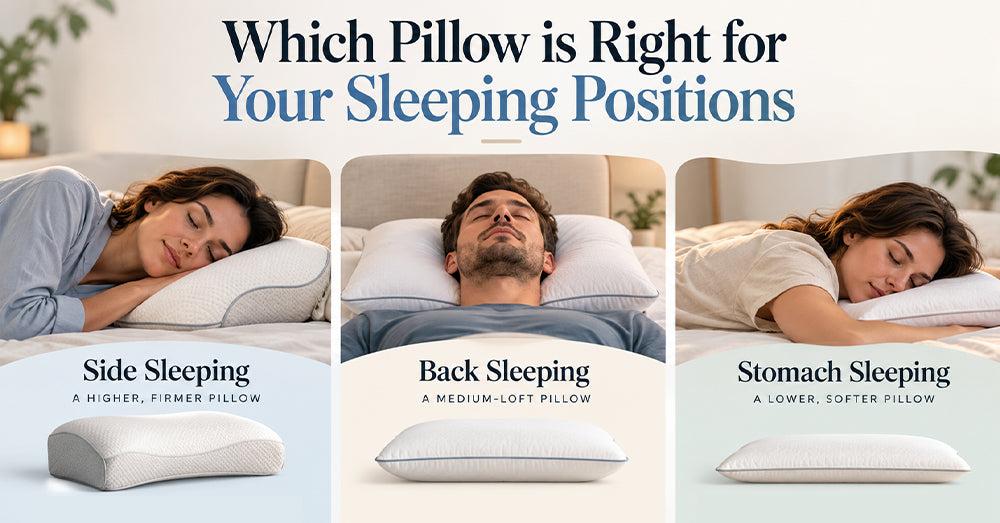

The pillow you sleep on can make a bigger difference than you might expect. If your pillow is too high, too low, too soft, or too firm for how you sleep, you may wake up with a stiff neck or feel uncomfortable throughout the night. The right pillow should support your head and neck while keeping your spine in a natural position. Because everyone sleeps differently, no single pillow works perfectly for everyone. Your sleeping position is a good place to start. Whether you sleep on your side, back, front or move between positions during the night, choosing a pillow that matches your habits can help you create a more comfortable sleeping setup. So, which pillow is right for your sleeping position? Let's look at the options.
Why Does Your Sleeping Position Matter When Choosing a Pillow?
Your sleeping position determines the gap between your head and the mattress. That gap changes depending on how you sleep. When you sleep on your side, your shoulder creates more space between your head and the mattress. You usually need a higher pillow to fill that space. When you sleep on your back, the gap is smaller. A medium-height pillow can often provide the support you need without pushing your head too far forward. When you sleep on your front, your head is already close to the mattress. A thick pillow can force your neck into an uncomfortable angle, so a thinner pillow is generally more suitable. Your mattress also matters. A softer mattress lets your shoulder and body sink deeper, which can reduce the pillow height you need. A firmer mattress may require a little more height.
Best Pillow for Side Sleepers

If you sleep mostly on your side, look for a pillow with enough height and support to keep your head level with your spine. A pillow that is too flat can let your head drop toward the mattress. One that is too high can push your head upwards. Neither is ideal for maintaining a comfortable sleeping position.
What Should Side Sleepers Look For?
A side sleeper will often benefit from:
- A medium-firm or firm pillow
- A higher loft
- Good neck support
- A shape that keeps its height through the night
- Supportive fillings such as memory foam or latex
The best height depends on your body shape, shoulder width and mattress firmness. For example, someone with broad shoulders may need a higher pillow than someone with narrower shoulders.
Memory Foam Pillows for Side Sleepers
Memory foam can be a useful option for side sleepers because it moulds around the head and neck while maintaining support. Contoured memory foam pillows can also provide a dedicated area for your head and neck. If you prefer a softer feel, look for an adjustable pillow that allows you to remove some filling until you find a comfortable height.
Best Pillow for Back Sleepers

Back sleepers generally need less pillow height than side sleepers. The goal is to support your head without lifting it too far forward. A medium-height pillow can work well for many back sleepers, although the ideal height depends on your mattress and body shape.
What Should Back Sleepers Look For?
Consider:
- Medium loft
- Moderate support
- A shape that supports the neck
- A filling that doesn't flatten too quickly
- A comfortable, supportive feel
Memory foam and latex are popular choices because they can maintain their shape rather than simply collapsing under your head. A contoured pillow can also be worth considering if you prefer more structured neck support.
Best Pillow for Front or Stomach Sleepers

If you sleep on your front, pillow height matters most. A thick pillow can lift your head and place your neck at a sharper angle because your body is lying face down. A low-profile pillow is usually a more suitable starting point. Some stomach sleepers even prefer using a very thin pillow or no pillow under their head, depending on personal comfort.
What Should Stomach Sleepers Look For?
Look for:
- A low loft
- A softer feel
- Lightweight filling
- A flexible shape
- A pillow that doesn't lift your head too high
Down and down-alternative pillows can work well for people who prefer a soft, compressible feel. A thin memory foam pillow can also work if you want more consistent support.
What Pillow Is Best for Combination Sleepers?

Do you change positions during the night? If so, you're a combination sleeper. You might start on your side, move onto your back and finish the night on your stomach. In this case, choosing a pillow designed for just one sleeping position may not feel right throughout the night. An adjustable pillow can be a practical choice. You can add or remove filling to change the height and firmness. This gives you more flexibility if your sleeping position changes. A medium-loft pillow with a filling you can compress or reshape can also work well.
How Do You Know If Your Pillow Is the Right Height?
Pillow height matters as much as the filling. When lying in your normal sleeping position, your head should feel supported without being pushed noticeably upwards or allowed to fall towards the mattress. For side sleeping, your head should remain roughly level with your spine. For back sleeping, your chin shouldn't be pushed towards your chest. For front sleeping, you generally want to minimise the amount your head is lifted. You may need to experiment with different pillow heights before finding the right fit.
Does Your Mattress Affect Pillow Choice?
Yes. Your mattress and pillow work together. If your mattress is soft, your body and shoulders may sink further into it. This changes the distance between your head and the mattress. If your mattress is firm, you may sit higher on the surface. For example, a side sleeper on a firm mattress may need a different pillow height from a side sleeper with the same body shape who sleeps on a very soft mattress. So don't choose a pillow based on loft alone. Think about your whole sleeping setup.
Which Pillow Filling Is Best?

Pillow fillings have different characteristics, so your choice comes down to the type of support and feel you prefer.
Memory Foam
Memory foam provides structured support and can mould around your head and neck. It's often suitable for people who prefer a supportive pillow that keeps its shape. Memory foam pillows can be particularly useful for side and back sleepers who want more consistent support.
Latex
Latex pillows are responsive and tend to retain their shape. They can offer a combination of support and cushioning without the slow, sinking feel associated with some memory foam products. Latex may suit sleepers who move around during the night and want a pillow that responds quickly when they change position.
Down
Down pillows are known for their soft and fluffy feel. They compress and reshape easily, making them appealing if you like to adjust your pillow during the night. However, very soft down pillows may not provide enough height or support for some side sleepers.
Down Alternative
Down-alternative fillings are designed to provide a similar soft feel without using natural down. They are available in different levels of firmness and loft, so they can suit a wide range of sleepers.
Polyester
Polyester-filled pillows are widely available and often offer an affordable option. They come in different thicknesses and firmness levels. However, some polyester fillings can flatten over time, so check the construction and care instructions before you buy.
Microfibre
Microfibre pillows can provide a soft, lightweight feel. They can be a good choice if you prefer a plush pillow that is easy to move and reshape.
Should You Choose a Soft or Firm Pillow?
No single firmness works for everyone. Your sleeping position is a good starting point. Side sleepers often need more support to fill the space between the head and mattress. Back sleepers generally need moderate support, while front sleepers often prefer a softer, thinner pillow. But personal preference still matters. If you love a soft pillow but sleep on your side, an adjustable pillow could give you the cushioning you like while allowing you to add enough filling for support.
What Is the Best Pillow for Neck Support?
If neck support is your priority, look for a pillow that maintains a suitable shape while you sleep. Contoured pillows are designed with different heights across the pillow to support the head and neck. Memory foam and latex can also provide consistent support. However, "orthopaedic" or "ergonomic" labels don't automatically mean a pillow will suit you. The correct height and shape still depend on your body and sleeping position. If you regularly experience significant or persistent neck pain, it's sensible to speak with a qualified healthcare professional rather than relying on a pillow alone.
How Often Should You Replace Your Pillow?
Pillows don't last forever. Over time, fillings can flatten, clump or lose their original shape. Your pillow can also collect sweat, skin oils and dust. A simple check is to look at the pillow's shape and support. If it stays flat after fluffing, has obvious lumps, or no longer feels supportive, it may be time to replace it. Lifespan depends on the filling, quality, care, and how often you use it. Always follow the manufacturer's washing and care instructions.
How to Find the Right Pillow for Your Sleeping Position
If you're unsure where to start, use this simple guide:
|
Sleeping position |
Pillow height |
Typical support |
Suitable fillings |
|
Side sleeper |
Medium to high |
Medium to firm |
Memory foam, latex, adjustable |
|
Back sleeper |
Low to medium |
Medium |
Memory foam, latex, down alternative |
|
Front sleeper |
Low |
Soft to medium |
Down, down alternative, soft microfibre |
|
Combination sleeper |
Adjustable |
Medium |
Adjustable or flexible fillings |
These are starting points rather than strict rules. Your shoulder width, body shape, mattress firmness and personal preference all affect what feels comfortable.
Common Pillow Buying Mistakes
Choosing a pillow based only on its appearance is an easy mistake. A large, fluffy pillow may look comfortable but could be too high for a back or front sleeper. Another common mistake is buying the firmest pillow available because you think more support must be better. Too much height or firmness can be just as uncomfortable as too little. You should also avoid choosing a pillow based solely on a label such as "luxury", "orthopaedic" or "hotel quality". Instead, look at the actual specifications. Check the height, filling, firmness, dimensions, cover material and care instructions.
Final Thoughts
The right pillow starts with the way you sleep. If you're mainly a side sleeper, look for enough height and support to fill the space between your head and mattress. Back sleepers often prefer a medium-height pillow, while front sleepers usually need a lower, softer option. If you change positions during the night, an adjustable pillow can give you more flexibility. And remember that your mattress matters too. The same pillow can feel completely different on a soft mattress compared with a firm one. Take your sleeping position, body shape, mattress and preferred feel into account before you buy. That gives you a much better starting point for finding a pillow that feels comfortable night after night.
FAQs
What is the best pillow for side sleepers?
A medium-to-high pillow with good support is often a suitable starting point for side sleepers. Memory foam, latex and adjustable pillows are popular options.
What is the best pillow for back sleepers?
A low-to-medium loft pillow with moderate support can work well for many back sleepers. The pillow should support your head without pushing it too far forward.
What is the best pillow for stomach sleepers?
A thin, soft pillow is generally a better starting point for stomach sleepers because it reduces how far the head is lifted from the mattress.
What pillow is best if I change sleeping positions?
An adjustable pillow can be useful because you can change its height and firmness. A flexible medium-loft pillow may also suit combination sleepers.
Should a side sleeper use a firm pillow?
Side sleepers often benefit from more support because the shoulder creates a larger gap between the head and mattress. However, the ideal firmness depends on your body shape, mattress and personal preference.
Is memory foam good for every sleeping position?
Memory foam can work for side, back and combination sleepers, depending on its height and design. A lower-profile memory foam pillow may suit front sleepers better.
How high should a pillow be?
There isn't one correct height for everyone. Side sleepers generally need more height than back or front sleepers. Your mattress firmness and shoulder width also affect the ideal loft.